Preorder

 Mobile Fidelity Sound Lab
Mobile Fidelity Sound Lab
Mobile Fidelity Sound Lab

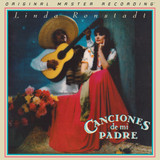
Linda Ronstadt brings it all back home on Canciones de mi Padre. Following on the heels of three consecutive records on which she interprets pop standards, Ronstadt’s first all-Spanish language album connects the iconic singer to her childhood in Arizona and her family’s roots in Sonora, Mexico. It quickly went double platinum, won a Grammy Award, and kicked off a series of Spanish-based records she’d release over the next five years. For these and many other reasons, the 1987 set — the biggest-selling non-English album in American history — became a cultural milestone and one of the most cherished works in her catalog.
Sourced from the original analog master tapes, mastered by engineer Krieg Wunderlich (assisted by Colby Gustafson), strictly limited to 3,000 numbered copies, pressed at Fidelity Record Pressing in California, and housed in a Stoughton gatefold jacket, Mobile Fidelity’s 180g 33RPM LP of Canciones de mi Padre presents the Grammy Hall of Fame album in audiophile sound. The lively production, co-helmed by longtime Ronstadt collaborator Peter Asher, is revealed with extraordinary detail, depth, and clarity. The quiet surfaces and groove definition of the vinyl greatly improve upon the quality afforded by prior editions.
Mirroring MoFi reissues of other Ronstadt albums, the vocals — often the most difficult instrument to faithfully portray — resonate with superb openness and naturalism. Ronstadt’s wide-spanning range and phrasing — vibrato, hiccups, shivers, dramatic holds, quick-fire passages — come across with rich tonality and image with you-are-there accuracy. Ditto the various harmony vocal parts and contributions of the nine-person chorus. Suffice it to say the string, brass, and woodwind instruments that give Canciones de mi Padre such liveliness and flair streak far, high, and wide across the soundstage.
For Ronstadt, this project was incredibly personal. Her authentic exploration of traditional mariachi fare stemmed from her heritage and youthful memories. Ronstadt grew up singing along to Mexican songs with her family as her dad spun records on the turntable on Sunday afternoons. As Ronstadt reflects in a short essay printed on the back cover:
“Many of the songs on this record were passed on through my father to me, and others I have learned through my continuing interest in the great vocal traditions of Mexico. These songs comprise a tradition both of my family and of a country which has made profound contributions to the world of music. They are a living memory of heartfelt experience.”
While prevented for more than a decade from pursuing the idea by her dominant success with country, rock, and pop, Ronstadt was well on her way to deviating from mainstream conventions in the mid ‘80s. Her succession of retro-minded records with arranger Nelson Riddle indicated she had enough of the predictable grind. Despite facing resistance from her record label, and dealing with some in the industry who thought she was crazy to risk her status on a Spanish-language album no one was certain would capture the ear of the public, Ronstadt pressed ahead. And became a pioneer and hero to an even larger audience.
With Asher’s support, she partnered with Rubén Fuentes, director of Mariachi Vargas de Tecalitlán, one of three leading mariachi ensembles on Canciones de mi Padre. And though Fuentes originally pushed for a modern take on the music, Ronstadt largely won out. She put her stamp on the rural-leaning repertoire and style of the mariachi that thrived in the 1930s and 40s. Her approach also pays tribute to legendary Mexican singer Lola Beltrán, someone Ronstadt considered an inspiration.
The results — passionate and exciting, sentimental and soothing, boastful and confessional — proved an incalculable influence on the successive waves of Latino artists who have since helped transform pop music. To say nothing of Mexican-Americans who finally witnessed a significant musician of their heritage trumpeting their ethnicity and celebrating their culture. As author Steven Loza observed in his 1993 book Barrio Rhythm: Mexican American Music in Los Angeles: Ronstadt “brought to [mariachi] an even larger, international level of commercial recognition and diffusion.”
The record’s impact, and brilliance, remain undimmed decades later.
Side One:
Side Two: